Online and mobile banking means handling your personal finances 24/7, without needing to visit a branch or wait for business hours. Most students already use their bank’s app in some basic way, but setting it up properly — beyond just checking your balance — makes it a genuinely useful tool instead of something you glance at occasionally.
Now that you’re a student handling your own money day to day, taking control of your personal finances starts with one basic decision: where that money actually lives. A checking account is the foundation everything else in this series sits on top of — it’s how you receive money, pay bills, and make purchases securely, and choosing the wrong one (or managing the right one poorly) can quietly cost you more than people expect.
Do your research thoroughly before signing anything. Off-campus renting can be cheaper than a dorm in some situations, and more expensive in others — the only way to know which applies to you is to actually add up the full cost, not just compare the advertised monthly rent to your dorm’s price tag.
A Resident Assistant, commonly called an RA, is a student who lives in a dorm and takes on a peer leadership and support role for the other residents on their floor or in their building — helping with everything from move-in logistics to conflict between roommates to being an on-call point of contact during emergencies. It’s a real job with real responsibilities, but the compensation attached to it makes it one of the most financially significant options covered anywhere in this series.
Why buy new when a well-preserved secondhand version does exactly the same job for a fraction of the cost — or nothing at all? Furnishing a dorm room or first apartment adds up fast if everything comes brand new, and a lot of that cost is genuinely avoidable once you know where to actually look.
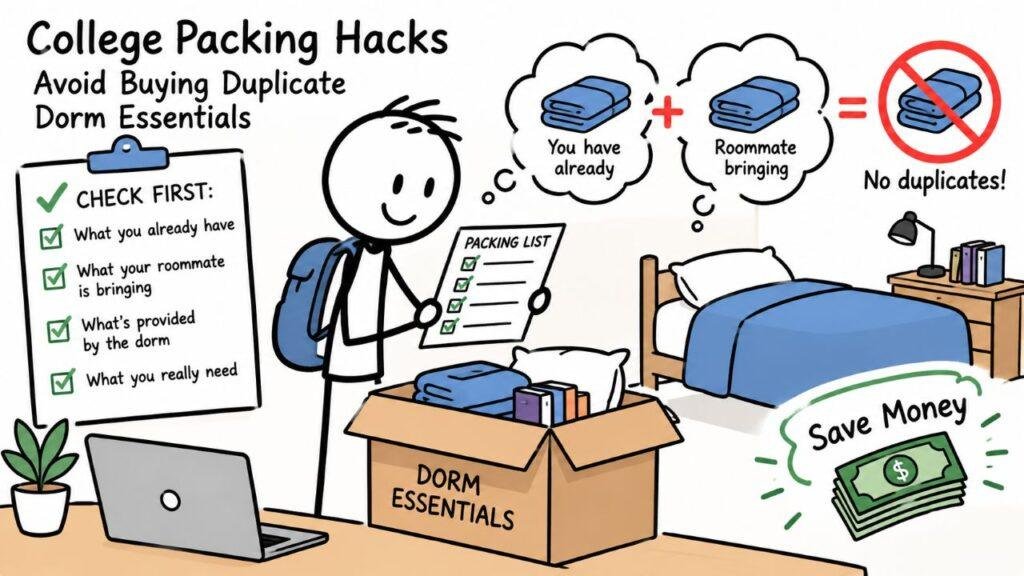
Good communication can save you real money before you’ve even moved in. The last post covered checking what your school already provides. This one covers the other half of the same problem: what happens when you and your roommate both show up with your own mini fridge, your own microwave, and your own set of pots and pans, because nobody talked about it first.
Some dorm rooms come with a microwave, a refrigerator, or access to an ironing board in a shared laundry room. Some don’t. The specifics vary enormously by school, and sometimes by building on the same campus — which is exactly why generic “dorm shopping list” content from big retailers isn’t a reliable guide to what you actually need. It’s built to sell you everything, not to tell you what’s already covered.
The “traditional” college experience — moving into a dorm, living on campus, the full-time residential experience — isn’t for everyone, and it isn’t required to get a real degree. If a local school is a genuine option, living at home for a while, even just the first year or two, is one of the largest single savings available to a student, on the same scale as the community college strategy covered earlier in this series — just applied to housing instead of tuition.
If possible, paying just the interest on your loans each month while you’re still in school is one of the most underused ways to graduate with meaningfully less student debt — not because it eliminates the loan, but because of how unpaid interest gets handled once repayment begins.
First, know which loans this actually applies to
As covered in the federal vs. private loans post earlier in this series, not all loans accrue interest the same way while you’re enrolled:
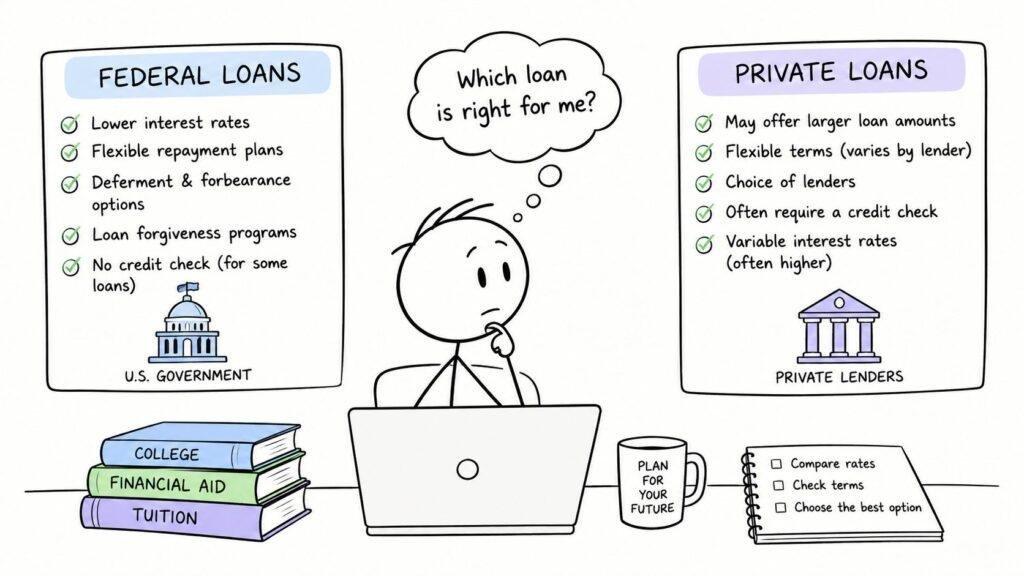
There are different rules for federal loans versus private loans, and treating them as basically interchangeable — “a loan is a loan” — is one of the more costly assumptions a student can make. The two categories are structured differently enough that the choice between them can meaningfully affect what you owe and how much flexibility you have if things don’t go as planned after graduation.
As with the loans and financial aid research post earlier in this series, this isn’t financial advice about which to choose — rates, terms, and specific programs change, and your right choice depends on your specific situation. What follows are the actual dimensions worth understanding, and where to check the current details for yourself: Federal Student Aid (studentaid.gov) for anything federal, and the Consumer Financial Protection Bureau (consumerfinance.gov) for plain-language explanations of borrower rights and private lending practices.